
A year ago, in a totally spontaneous turn of events, I decided to join some European friends I met in Costa Rica to embark on a South American adventure I would never forget. Although South America had always seemed intimidating to me, the opportunity to explore it was too tempting to pass up.
One of Peru's biggest draws, aside from its rich history and culture, was the famous Salkantay Trek, a challenging five-day hike to Machu Picchu. Despite not being fully prepared, the excitement of tackling one of the most renowned treks in the world was stronger than any doubts.
The trip began in Cusco, where a van took us to the starting point of the trek. Accompanied by a guide who was an expert in the local flora, the group began the climb. The first day was an acclimatization to the change in altitude, reaching up to 4,500 meters above sea level. As we ascended, the guide introduced us to the coca plant, essential to mitigate the effects of altitude sickness.
The Salkantay Experience and the Challenge of the Elements
The landscapes were spectacular from the start, but the second day took us to the Humantay Lagoon, a site of impressive beauty with phosphorescent blue waters and snow-capped mountains in the background.
However, the trek was not without its challenges. As we continued, the weather became a formidable adversary, with freezing rains turning the trail into a slippery stretch of mud and rocks.
The real test came when the soles of my old boots completely fell off. Fortunately, the solidarity of the group and locals helped find temporary solutions, although I ended the day trudging along in borrowed Crocs.
Culture and Human Connection on the Road
Beyond the physical effort, the trek was a deeply human and cultural experience. Interacting with other travelers and locals, sharing meals made from ingredients collected directly from nature, and participating in traditional rituals greatly enriched the experience.
Capturing the essence of Salkantay was no small task . With my Canon 80D in hand, I set out to document not only the stunning landscapes but also the intimate moments of our adventure.
Without a mood board or a specific plan, I let inspiration flow naturally, resulting in authentic and emotional images. Photographing in such challenging conditions taught me to adapt and capture the beauty in the unexpected.
Arrival at Machu Picchu
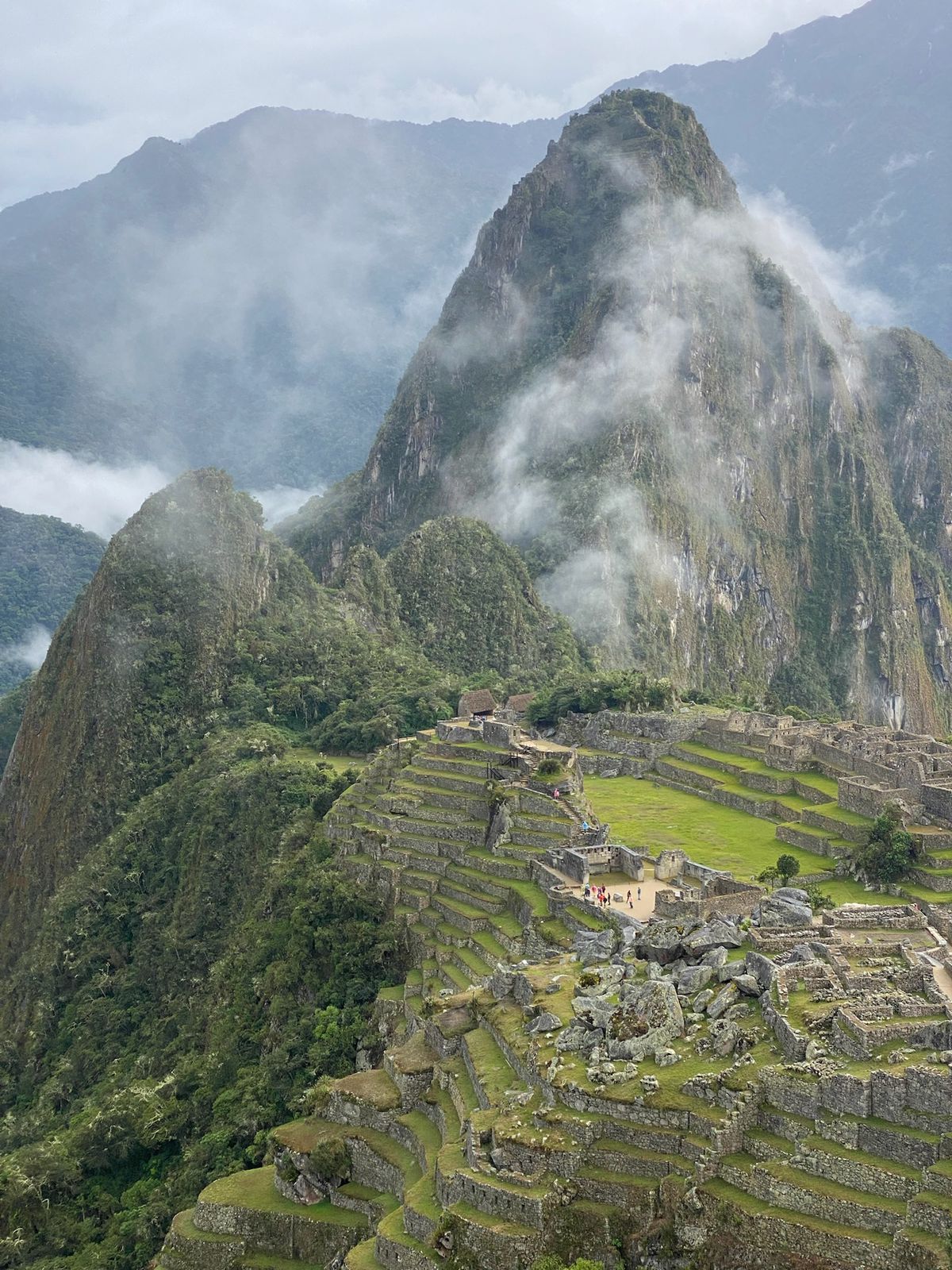
The last day of the trek was the most anticipated: the arrival at Machu Picchu. After days of continuous effort, seeing the ancient Inca city emerging from the clouds was a magical moment that justified every step of the way.
This was not just a physical journey, but a journey of self-discovery and connection with history that culminated in a majestic photograph.
Essential Equipment: The Aletazul Difference
For any adventurer embarking on a similar journey, I would strongly recommend preparing yourself with the right gear. Aletazul T-shirts , designed to protect from both the sun and the cold, and rain ponchos are a must. Additionally, a Dry BackPack can ensure your essential belongings remain dry and secure, without adding unnecessary weight.
The Salkantay Trek was more than a journey; it was a transformation. It began with uncertainty but ended with a deep appreciation for overcoming challenges and for natural beauty. This experience taught me that challenges can lead to significant rewards.
Practical Tips for Adventurers
1. The Importance of the Guide
Don't underestimate the importance of a good guide. Mine was an expert on local flora, used coca leaves to help with altitude sickness, and knew every step of the way, enriching the experience with fascinating stories and facts about the nature around us.
2. Essential Equipment
Don't skimp on gear. Hiking boots are a must; they need to be comfortable and sturdy. I learned the hard way when my old boots disintegrated mid-descent. I recommend investing in a good pair that can handle varied terrain and extreme weather conditions.
3. Physical Preparation
Don't underestimate the demands of trekking. Being in good physical shape will make the difference between enjoying the trip or simply surviving. If you're not used to walking long distances, train several months beforehand, focusing on cardio and leg strength.

Leave a comment
All comments are moderated before being published.
This site is protected by hCaptcha and the hCaptcha Privacy Policy and Terms of Service apply.